Thursday, January 29, 2009

Journal #8 Sui Sin Far

Liana Laskin

English 48B

"The Land of the Free" by Sui Sin Far

January 29, 2009


“Yi bu wang hua” or “The righteous one does not forget China.” (What the characters on her gravestone say and mean, http://www.findagrave.com/cgi-bin/fg.cgi?page=gr&GRid=10044414)

Summary:

The story starts out with the character of Lae Choo thinking about all the wonderful things that are in America. They are met by her husband Hom Hing, who has been working in San Francisco, as well as two customs officers. They ask where the child was born; it turns out that Little One was born in China and there is no paperwork to verify that he is Hom Hing's and Lae Choo's son. The baby is taken away, causing Lae Choo to go into a depression, going to the point of starving herself. They ask a lawyer named James Clancy to send a letter to Washington so they get their son back. He will do it, at a price; Lae Choo gives up all of her jewelry. By the end, she is able to get her son back. Now named Kim, the little boy is scared of his mother and wants nothing to do with her.

Response:

The ending was heartbreaking not because the boy had become so different, but because I was rooting for Lae Choo to get her son back completely. The beginning was quite interesting to read because the language that Sui Sin Far used to give Lae Choo's thoughts a romanticized twist; it definitely reminded me of the beginning of "The Imported Bridegroom" and how Flora has an idealistic vision of marrying an American doctor. Another thing that jumped out at me was that the second customs officer actually did feel sorry for Lae Choo, even going so far as to say that he hated having to separate Hom Hing and Lae Choo from their son just because they did not have paperwork for him. I liked how Sui Sin Far made a point, showing that not all white Americans felt splitting families was the right thing to do. I believe that this story was definitely not just a "feel bad for the Chinese immigrant" or even "praise the white Americans for giving the Chinese child a better life" story. I think that even though it may be easier to sympathize with Hom Hing and Lae Choo because they are getting their son taken away, I can also see things from the point of view of the customs officer (even if the law is awful). It was not as if a law had just been enacted; unfortunately, they did not have the paperwork for Little One and rules are rules. Although Kim may not live the life Hom Hing and Lae Choo wanted him to live, he may be happier living as an Americanized Chinese child.

Wednesday, January 28, 2009

Journal #7 Cahan

Liana Laskin

English 48B

"The Imported Bridegroom" by Abraham Cahan

January 28, 2009

"As early as the summer of 1882, however, Abraham Cahan, in the United States only a very short time, challenged the Russian-speakers by pointing out that the Jewish workers did not understand the propaganda that the intellectuals were disseminating. It was proposed, almost as a lark, that Cahan lecture in Yiddish; and relatively quickly this so-called folk vernacular became the primary medium of communication. For some time, however, the consensus continued to be that Yiddish was strictly an expedient in the conduct of socialist activitiy and not a value in itself." (Gerald Sorin, http://en.wikipedia.org/wiki/Abraham_Cahan)

Summary:

Taking place in New York, the story centers around Asriel Stroon, the father of Flora, wanting his daughter to marry a traditional, religious Jewish man who will be able to perform the Kaddish on the anniversary of his death as he does not have a son to do it. Flora has other ideas, having been raised in America; she wants to marry a doctor and has romanticized ideas of the life she would have. Asriel goes back to his homeland and when he comes back brings with him Shaya, a prodigy and the man he wants Flora to marry. Initially she refuses to have anything to do with him, but eventually as he studies to be a doctor, she changes her mind.

Response:

I understand Flora's detestation of her father telling her who she should marry; I am half Jewish on my father's side (just by birth) and would be just as angry if he had those ideas about marriage and wanted me to marry a certain person. But Flora is also quite ignorant of how the world works, especially when she finds out that the "educated people" she has fantasized about are a mish mash of different cultures and ways of life ("be careful what you wish for because it may come true" definitely applies in this situation). And Flora cannot be too mad because this was what she wanted. I personally think she got what she deserved because she manipulated Shaya to become her ideal husband by training to be a doctor and expecting a lot in her life, especially since she already had so much when she was living with her father.

Thursday, January 22, 2009

Journal #6 Zitkala Sa


Liana Laskin

English 48B

"The School Days of an Indian Girl" "The Soft-Hearted Sioux" "Why Am I a Pagan?" by Zitkala Sa

January 23, 2009

“Perhaps my Indian nature is the moaning wind which stirs them" [schoolteachers] "now for their present record. But, however tempestuous this is within me, it comes out as the low voice of a curiously colored seashell, which is only for those ears that are bent with compassion to hear it."
http://en.wikipedia.org/wiki/Zitkala-Sa

Summary:

"The School Days of an Indian Girl" chronicles Sa's life from her childhood with her mother to being taken to an Indian school and being turned into a civilized savage. "The Soft-Hearted Sioux" is a fictional narrative about a man who has abandoned his tribal way of life (at least in the eyes of his parents) to become a Christian; although he tries and fails to save his dying father, he is still sentenced to death for betraying his tribe. "Why Am I a Pagan?" focuses on Sa's "beliefs and counters the trend of showing Indian writers conforming to traditional Christianity" (
http://en.wikipedia.org/wiki/Zitkala-Sa).

Response:

I felt that because Sa's story about growing up, from being with her mother to going to school and realizing the world she thought existed outside her village was only a fantasy, was more tragic that it became more personal than Winnemucca's. Since I was born after Indian schools like the one in her story were shut down, I do not know if it is possible for me to fully comprehend what she really went through. Her story made me think of the phrase "stranger than fiction," especially with the white people who would come to her school and think they were doing the children a favor by getting rid of anything that could relate back to their native culture. "The Soft-Hearted Sioux" was quite an odd read for me. I think because of the fact that Sa is ambiguous about whether the meat is human or beef was very disturbing (when I read the story, I thought he had taken meat from a white man's cattle).


Wednesday, January 21, 2009

Journal #5 Winnemucca


Liana Laskin

English 48B

"Life Among the Piutes: Their Wrongs and Claims" by Sarah Winnemucca

January 21, 2009

"I am a shell flower, who could be as strong or as beautiful as me."
http://en.wikipedia.org/wiki/Sarah_Winnemucca

Summary:

In the first chapter, Winnemucca talks about her childhood and how her tribe first ran into white settlers heading west for California. Her grandfather believes these people are the tribe's "white brothers" come to reunite with them; of course, this is not the case. In the end, the tribe begins to fear when the whites will come through their land and kill them. Chapter two talks about how the tribe has the "Festival of Flowers" in the spring, a time when young men and women court each other. The last section (chapter eight) takes place after Winnemucca has become an interpreter for the American army. The chapter ends with those in the Bannocks relocating to the Yakima Reservation on Major Cochran's orders.

Response:

Although this is a translation of what Winnemucca originally wrote (therefore, the legitimacy of everything in the story is put into question by many), I have a feeling the only person who may or may not have twisted the story is Winnemucca herself. Early on she talks about a dream her grandfather had: "In the beginning of the world there were only four, two girls and two boys" (Winnemucca, 503). There could be a connection made to Genesis and the story of Adam and Eve because this may have been a part of her lectures, where she would have been in front of a white audience whose perception of Indians was that they were savages. Of course, the reference could be a coincidence as many cultures have similar creation stories. I believe that Winnemucca, like Booker T. Washington, had to appeal to her audience just to be heard. It is possible that she could have twisted her words slightly to make it so the connotation of some of the things she says could depend on who is listening to her speak and what their perception of Native Americans is. As for her editor, Mary Mann, writing and changing most of the story, I just do not see that being the case.


Thursday, January 15, 2009

Journal #4 Du Bois

Liana Laskin

English 48B

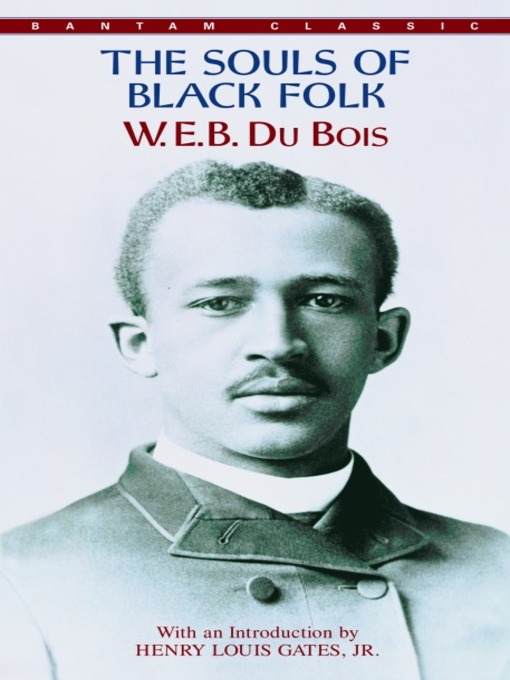
"The Souls of Black Folk" by W.E.B. Du Bois

January 15, 2009

"The Father of Pan-Africanism." http://en.wikipedia.org/wiki/W.E.B._Du_Bois

Summary:

In this story Du Bois talks about his experiences with racism as a child when a little white girl refused to accept a card from him as well as the white people who would come up to him as an adult and in so many words tell him that they pitied him. He also brings up "double-consciousness," pointing out that while it is painful to be considered a Negro and an American rather than just an African American, he does not think it is a bad thing to have that separation. In the third chapter he critiques Booker T. Washington's ideas about what is appropriate for Negros to have at the time, but also sees eye to eye with him.

Response:

I appreciate that Du Bois says that even though he feels split up into two different "souls," he makes a point of saying that these two halves can be brought together to make an even stronger whole. He definitely shows that America would not be what it is today without the pain and something Negros had to go through, especially when it comes to the cultural aspects that have been adopted and now labeled as "American." I think that it is important that Du Bois is not just critical, but in support of Washington's ideas because it would be wrong to say that Du Bois absolutely agrees or disagrees with Washington. I also really liked that Du Bois had bars of music (the spirituals) at the beginnings of chapters one and three because I think it made them more personalized and added an interesting visual to think about.

Wednesday, January 14, 2009

Journal #3 Washington

Liana Laskin

English 48B

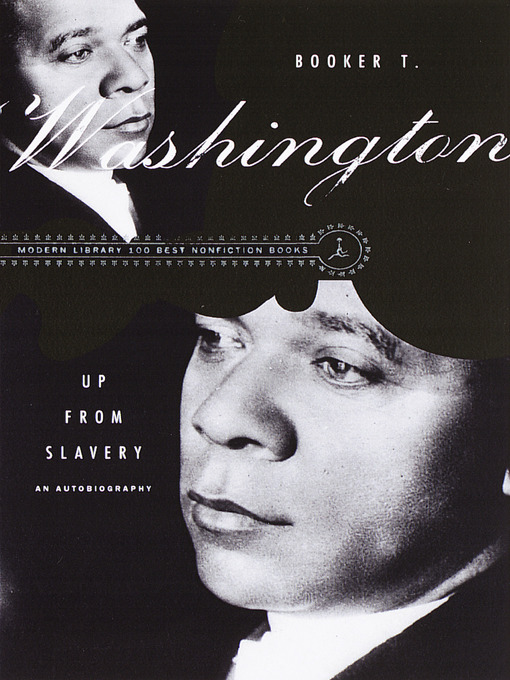
"Up From Slavery" by Booker T. Washington

January 14, 2009


"I have learned that success is to be measured not so much by the position that one has reached in life as by the obstacles which he has had to overcome while trying to succeed."
(Source: http://en.wikipedia.org/wiki/Booker_T_Washington)

Summary:

The first two chapters of this story are about Washington's childhood first as a slave and then as a schoolboy working in the saltmines. Chapter fourteen focuses on his famous speech, the Atlanta Compromise, and meeting Presidents Cleveland and Roosevelt.

Response:

I found a quote from Washington's speech ("Cast down your bucket where you are") to be a terrible thing not only for those of African American decent, but also for anyone because it basically says that it is better to gradually make it from the bottom to the top, even if a person is qualified to be in a higher position. Although I can see that Washington could only say and do so much because his audience was mainly Southern, I can definitely understand that many would think he was not doing enough. I was actually quite surprised that he of all people would be sympathetic and pity the white people who kept slaves. His reason for pitying them (saying that slavery hurt them because they never learned to do things like cook, clean, and take care of a home without slaves) is justified, but I have a hard time understanding why anyone who was a slave would feel sorry for the race of people who made them into something less than human. I liked that Washington was very honest about the fact that just because slaves were free did not mean that life got much better. In fact, at least in Washington's case, living got a little worse because where he was living was smaller and dirtier than when he was a slave and working in the salt mines was scarier. Yes, he may have been able to get an education, but at the expense of possibly living worse than before.

Thursday, January 8, 2009

Journal #2 Gilman

Liana Laskin

English 48B

"The Yellow Wall-paper" by Charlotte Perkins Gilman

January 9, 2009

"When all usefulness is over, when one is assured of an unavoidable and imminent death, it is the simplest of human rights to choose a quick and easy death in place of a slow and horrible one." (From Gilman's suicide note, http://en.wikipedia.org/wiki/Charlotte_Perkins_Gilman)

Summary:

This story is a set of journal entries written by the narrator during the 1890s, who is being taken by her husband John, a physician, to a grand but "queer" house for the summer. John is her treating her for her "nervous depression," forbidding her from doing absolutely any work and confining her to a room upstairs that has bars on the windows, the bed bolted down to the floor, peeling yellow wallpaper, and a strange "yellow" smell; she begins to fixate on the wallpaper. After a while she sees that a woman is "trapped" behind the main pattern of the wallpaper. The narrator soon discovers that there are many "creeping women" in and outside of her room and the house as she slowly descends in madness.

Response:

After going through this story and really picking it apart, I began to realize that it become quite intriguing. The saying "truth is stranger than fiction" could not apply better! Ironically, I do not think the narrator completely went completely insane, but almost "woke up" from the life she was living, in a way; of course, she literally does go crazy. In the end, I think she becomes stronger than her husband because she is not a subordinate woman to him, but another creature entirely. This transformation really reminded me of a story I read for English 1B called The things They Carried, which was written about soldiers who served in Vietnam. I remembered the character of Mary Ann, a girlfriend of one of the soldiers who comes to visit him. When she first comes, she pretty and needs to be taken care of, but by the end of the chapter she appears in, she has transformed and adapted to her environment (Vietnam) so much that she becomes something that cannot be labeled. Although this did not happen because she went mad, the narrator really reminded me of Mary Ann. I also love that the story ends without really telling the reader what really happened. I could see just going insane in the room more than committing suicide in the end or even killed herself before the climax. And just like the wallpaper, more can be discovered after reading the story again and again.


Wednesday, January 7, 2009

Journal #1 Bierce


Liana Laskin

English 48B

"An Occurrence at Owl Creek Bridge" by Ambrose Bierce

January 7, 2009

"The state or condition of a community consisting of a master, a mistress, and two slaves, making in all, two." (Bierce's definition of marriage)

Summary:

The story takes place during the civil war and features a southern planter, Peyton Farquhar, who is about to be hanged by Union soldiers. It is separated into three sections: the moments before the hanging, Farquhar leaving deciding to leave and get across the bridge, and after he is hanged.

Response:

I feel like each section in a way is written by a different person based on how the character of Farquhar is looked at. In section one, the perspective is a third person point of view, but not omniscient as the reader does not know what the characters are thinking. The writing is almost as formal and cold as the soldiers preparing to hang Fauquhar, making me think that if there was a specific narrator for this section, they would be on the side of the Union soldiers rather than the Confederates. As the section ends, I could almost feel the suspense that Farquhar was feeling, especially in the line where the "ticking of his watch" took the place of the thudding heartbeat (Bierce, 361). Section two, which is quite short (less than a page), would be from the persepctive of someone who is biased towards the Confederates considering it shows Farquhar and his wife; I believe this section is the shortest because of what Bierce's idea of marriage is (see quote above). The last section is definitely omniscient third person as it focuses on what Farquhar is thinking and his perspective after being hanged and later going down the river. I have never read a story with a hanging that actually gave the perspective of the victim after being hanged (I would asume it is because most of the time the person's weight ends up breaking their neck and killing them almost instantly). I thought the plot twist at the end was pretty cool because I thought things were going to work out differently for Farquhar because of how he was portrayed in the frist two sections.